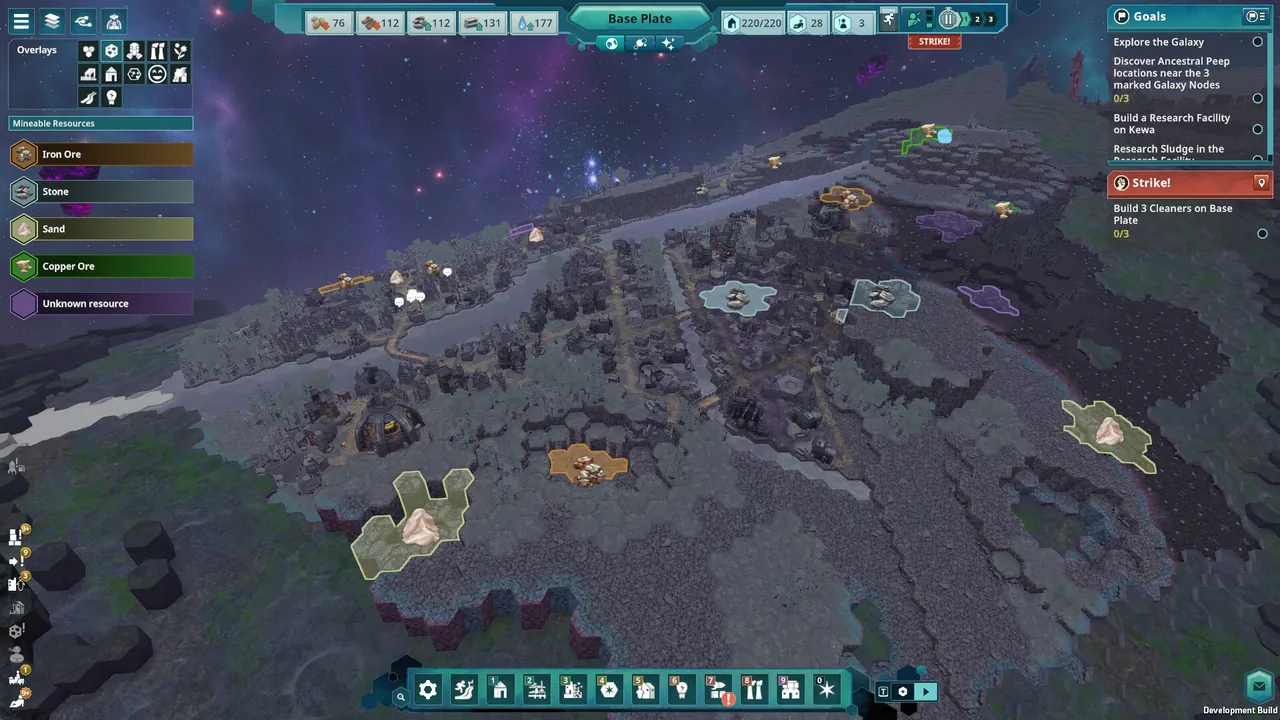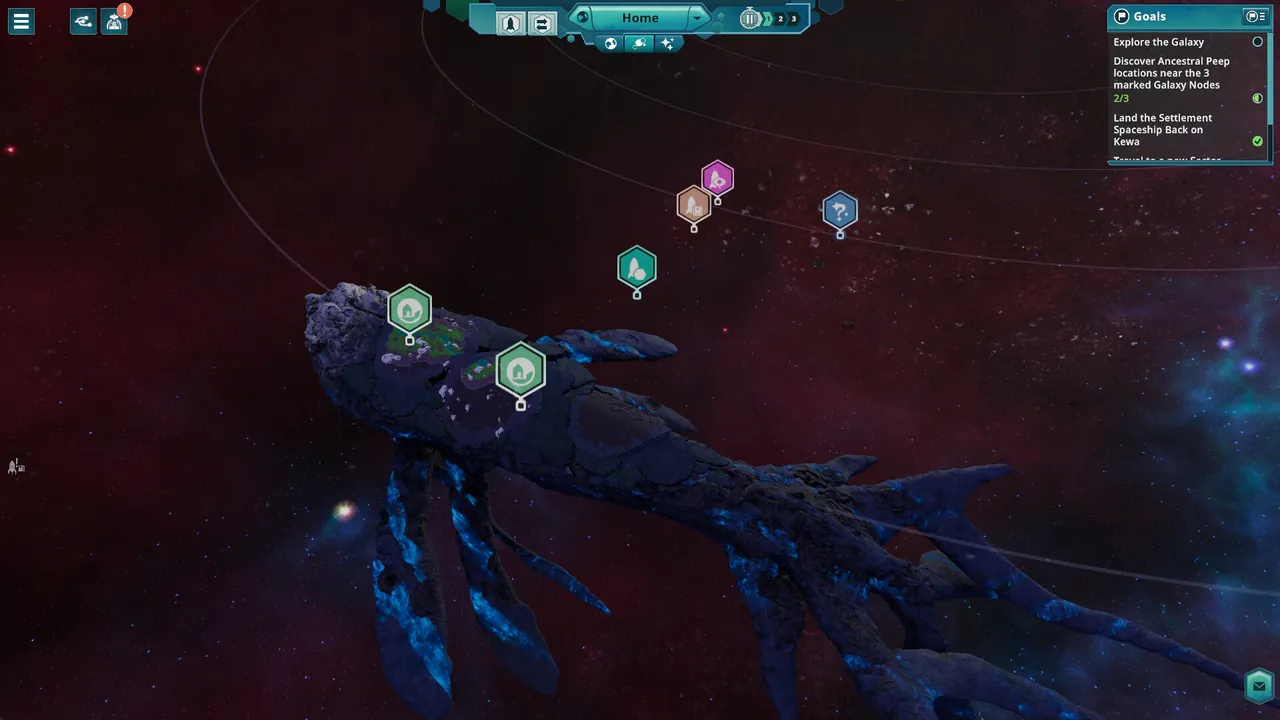
The demo teaches you to survive the opening. The hours after that teach you to run a colony that does not need rescuing every shift. These tips assume housing, water and food are already stable and that you are now dealing with industrial buildings, restless Peeps and the question of whether to leave Kewa for another planet.
Early Colony Economy
Cluster each production line around its suppliers. The store description ties adjacency bonuses and travel times to output, which means the distance between steps is paid in Peep hours. Put a Mine, its Smelter and the storage between them within a short walk of each other.
Count the byproduct before you place the building. Hands-on previews indicate that every production line returns two resources — the main product and something else — so each industrial building creates a second logistics problem as it solves the first. The production chains page works through how those outputs relate.
Send soot somewhere useful instead of to the dump. The same previews point to soot feeding into the steel chain, turning an awkward waste stream into an input and saving the storage and hauling.
Put the Dump where the waste is made. A dump beside the industrial row keeps the hauling in the district; one across the settlement means every load crosses the map twice. When waste turns into pollution, the Cleaner is the other half of that decision. The pollution guide covers which building does which job.
Separate polluting factories rather than lining them up. Hands-on previews indicate that clusters of polluters worsen the tiles around them, which turns a production decision into a housing problem — unhappy neighbours cost more to fix than a longer road.
| Habit | Why it pays off | When it matters |
|---|---|---|
| Cluster a chain with its suppliers | Adjacency and short travel times cut the walking between steps | Every time you add a building to a line |
| Note the byproduct before placing | The second output needs a destination or it becomes storage and pollution | Before your first Smelter |
| Keep a Dump beside the waste source | Hauling waste across the colony is Peep time spent on nothing | As soon as soot or wood waste accumulates |
| Spread polluting buildings out | Clustered polluters degrade the surrounding tiles and the Peeps on them | When the first factory lands near housing |
Pro tip: Open the pollution overlay every time you finish an industrial building. Emissions concentrate where industry clusters, and catching the first hotspot costs far less than clearing a district later.
Keeping Peeps and Kewa Stable
Watch energy before the next shift begins. In the 1.0 release, sickness is checked at the beginning of a shift, with higher risk when energy is low. A sick Peep stays home, and prolonged sickness can be fatal. The sickness and mourning guide explains recovery items and the community effects of a death.
Take the celebration bonus seriously. A location where enough Peeps pass the happiness threshold triggers a celebration at a Fairground, and each celebration grants the colony a bonus to production, movement or disease resistance without costing work hours. Over-care is rewarded here: a Peep with more than it needs is a Peep generating a buff for everyone else.
Fix strike root causes on the first warning. When a strike starts, the game gives you a task related to its cause, such as more housing or toxic-area cleanup; finishing it ends the strike early. The first strike runs three shifts, and later durations depend on whether earlier goals were met. Striking Peeps also block their colleagues. The happiness and strikes guide separates the trigger, task and timer.
Read Kewa's signals the way you read the resource bar. Fruit trees appearing mean the whale is thriving and passing a happiness bonus to your Peeps; thorny stems mean it is not. Temperature is the dial in between: keep Kewa too hot for long and it becomes unhappy, and let its condition fall badly enough and it will travel to a cold region on its own to cool down. The Kewa care guide explains the health levers in full.
Keep a repair buffer. Kewa's stamina sometimes runs low enough that it detours to a debris field to feed, and the debris can damage buildings. Holding spare wood and one free builder for repairs turns an interruption into a short delay. A colony running with zero slack absorbs the same event as a crisis.
Balance jobs against workers. The official wiki notes that shifts are synchronised across the whole population — everyone works, then everyone eats and rests — so a colony with more jobs than workers leaves its least important workplace idle every shift rather than spreading the shortage around. Check the idle count on the top bar before adding another production building; an unemployed Peep is a worker you have already paid for.
Feed breaks properly. The official wiki describes breaks the same way the game plays them: between shifts, Peeps head home to eat and drink, and that is what restores their happiness and energy — with better food and drink restoring more of both than plain staples. Keeping a stocked, varied larder within reach of housing is one of the cheapest permanent buffs in the game, and it is exactly what the planetary goods unlocked later, from milk to berries, are for.
Efficiency and Expansion
Test a chain in Sandbox Mode before trying it in your story colony. Sandbox lets you configure terrain, river presence, resources and planets, with an option to unlock every building and difficulty indicators for the selections. The Sandbox settings guide distinguishes these confirmed options from custom rules the developer has not announced.
Shape the land before you commit buildings to it. Canals move water, topsoil gives you ground worth building on, and planted trees spread atmosphere to open areas your Peeps could not previously use. Forests keep paying out timber as well, so tree planting is one of the few investments that answers both a land problem and a materials problem.
Check a sector's temperature before you settle in it. Temperature varies between star systems and affects both Peep mood and how quickly crops grow, so a resource-rich planet that sits uncomfortably cold is a supply line with a permanent tax attached. Bring the crops that tolerate it, or plan the imports.
Plan landing infrastructure alongside the fleet. Ordinary ships need Landing Pads, while a Settlement Ship can make the first planetary landing without one. Once landed, that ship needs a Space Port built in the area before it can leave again. Send a Scout Ship to inspect the destination first and review the ships and landing pads guide before establishing the outpost.
Sources
- Official Hooded Horse wiki, Peeps (work radius, synchronised shifts, breaks): https://wiki.hoodedhorse.com/Beyond_These_Stars/Peeps
- Official Hooded Horse wiki, Pollution (forests, cleaners, soot supply): https://wiki.hoodedhorse.com/Beyond_These_Stars/Pollution
- Steam store page (adjacency bonuses, travel times, terraforming, forests and atmosphere): https://store.steampowered.com/app/2295060/
- Steam announcement, "Dev Blog #22: Celebrations": https://store.steampowered.com/news/app/2295060/view/1827626365751448
- Steam announcement, "Dev Blog #23: Strikes": https://store.steampowered.com/news/app/2295060/view/1830163047253538
- Steam announcement, "Dev Blog #25: Peep Sickness": https://store.steampowered.com/news/app/2295060/view/1833968530889579
- Steam announcement, "Dev Blog #27: Sandbox Mode": https://store.steampowered.com/news/app/2295060/view/1836506165569153
- Steam announcement, "Dev Blog #28: Settleable Planets": https://store.steampowered.com/news/app/2295060/view/1838407329267634
- Steam announcement, "Dev Blog #29: Keeping Kewa Happy": https://store.steampowered.com/news/app/2295060/view/1840944183775191
- Steam announcement, "Developer Diary: Peep Business": https://store.steampowered.com/news/app/2295060/view/1790214123224062
- Epic Games Store hands-on preview (two-output production lines, soot into steel, Kewa's reactions): https://store.epicgames.com/en-US/news/beyond-these-stars-is-a-sustainable-city-builder-where-you-survive-on-the-back-of-a-sentient-celestial-whale