Production in Beyond These Stars is rarely a straight line from raw material to finished good. Hands-on previews report that every production building issues a main product plus a byproduct, and that second output is a resource in its own right rather than a rounding error. Building around that single rule changes how you lay out a colony.
The Two-Output Rule
Treat each building as two supply lines sharing one footprint. A production run returns the item you wanted and a leftover — soot, wood waste or another residual — and leftovers accumulate whether or not you have somewhere to put them. Because the whole economy is built this way, a chain that ignores its byproducts is only half-designed.
Soot and Wood Waste are the two waste streams named so far in demo and preview material, and the official wiki gives each a job downstream. Soot appears around burning and smelting, is the operating supply that Cleaners consume to scrub pollution, and hands-on previews indicate it can also feed into steel production rather than being discarded. Wood Waste comes out of timber processing and is the only early means of producing Compost, the material that turns bare tiles into fertile ground — the official wiki describes that supply chain as the backbone of early terraforming. Both are therefore inputs waiting for the right building, not garbage.
Plan storage for both outputs rather than the one you wanted. A storehouse sized around finished goods can fill with a byproduct instead, and the practical question at that point is where the second material goes, not how fast the first one sells. Storage and Storage Shed both belong near a line for that reason.
The reframing also changes how a stalled line reads. When nothing is moving, the cause may be the second resource rather than the first, and the fix may be a Dump or a downstream building rather than more workers. Diagnose the byproduct before you diagnose the product.
The table below maps the materials confirmed in the demo, the official wiki and previews to where each one sits in a line.
| Material | Comes from | Feeds into |
|---|---|---|
| Wood | forest tiles via Woodcutter and Sawmill | construction, Burner power, Wood Waste |
| Wood Waste | timber processing | Compost production; power generation in the demo build |
| Compost | Compost Heap, fed by Wood Waste | fertilising bare tiles for farms and new forests |
| Debris | Landscaper digging work | stored, or stacked to raise new ground |
| Iron Ore | underground deposits via Mine | Ore Smelter, then metal production |
| Soot | burning and smelting | Cleaner operation, and steel production per hands-on previews |
| Shells | a settled planet | cement |
| Copper Ore | underground deposits via Mine | electronics production |
| Potatoes | the Potato Patch on Kewa | Peep food, the baseline diet |
| Kewa Fruit | a happy, healthy Kewa | a happiness bonus for Peeps |
Dumps, Waste and What Recycling Means Here
A line generates waste faster than most players expect, which is why the Dump exists. It is a two-by-two waste site in demo material, and its function is to hold residuals your lines have not absorbed yet. A Dump is a buffer rather than a solution: it buys time until a downstream building can use the leftover, and it is one of the structures covered in the buildings guide.
The closest thing to recycling is routing a byproduct back into an earlier chain. Soot feeding steel is the clearest confirmed example, and it shows the pattern worth copying — before dumping anything, ask which building upstream would take it as an input. A residual that already has a customer is not waste at all.
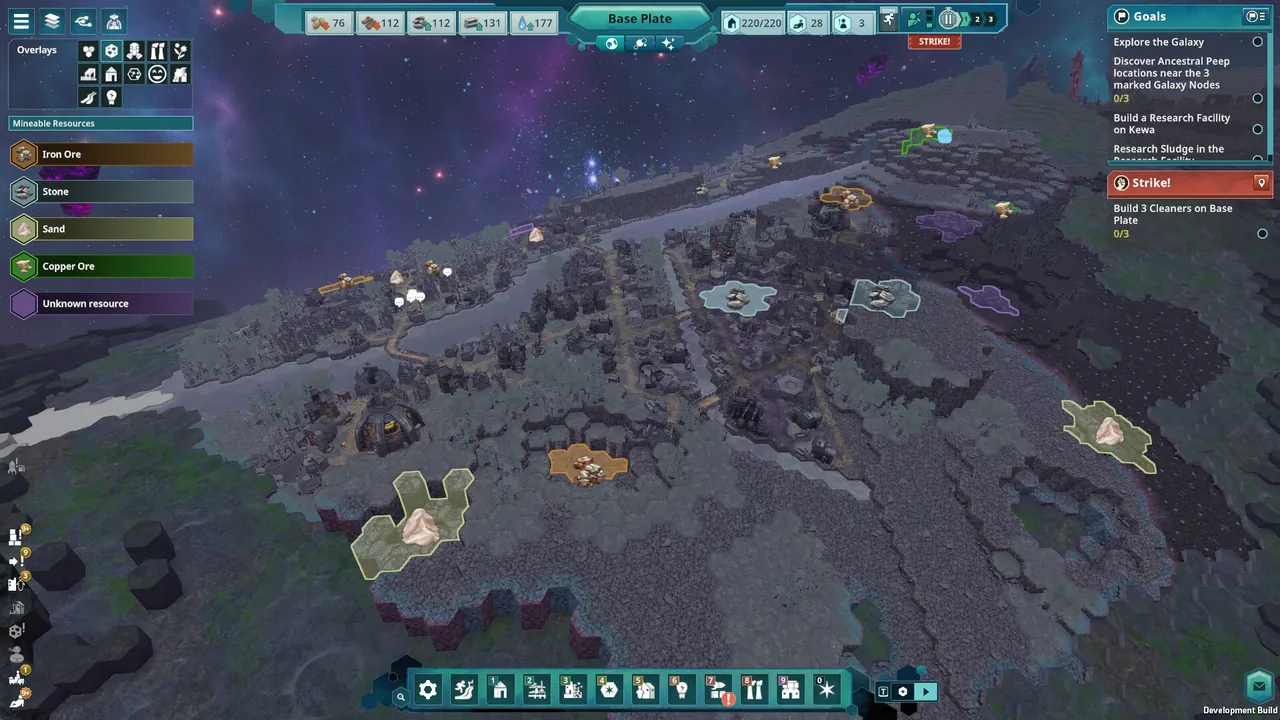
The tiles themselves are visible in the game's overlays. Screenshots from the current builds show a pollution overlay alongside a mineable-resources overlay, and the pollution views are the fastest way to see where emissions are building up before they reach the tiles your Peeps walk. Contaminated tiles slow Peeps and drain their happiness faster, so waste handling is a wellbeing system wearing an industrial costume. The pollution guide covers the cleanup side in detail.
Site a Dump where it is easy to reach and easy to empty. It belongs beside the line that generates the most residue, close to the roads that will carry material onward, and away from the houses it is meant to serve. Cleanup has its own answer too: forests suppress pollution passively, and the Cleaner scrubs what still builds up.
Watch the overflow rather than the total. A Dump filling faster than you can route its contents is a signal that the line upstream is overbuilt, and that warning arrives well before the overlay turns visibly bad. Prevention is cheaper than remediation, so the goal is a layout where waste never outpaces the buildings that can use it.
Why Balanced Lines Beat Maximal Ones
It is tempting to overbuild. Cluster several factories together, feed them all at once, and output climbs — for a while. The bill arrives late, because pollution from a dense industrial zone settles on the tiles your Peeps cross, and their mood falls faster the heavier the contamination becomes.
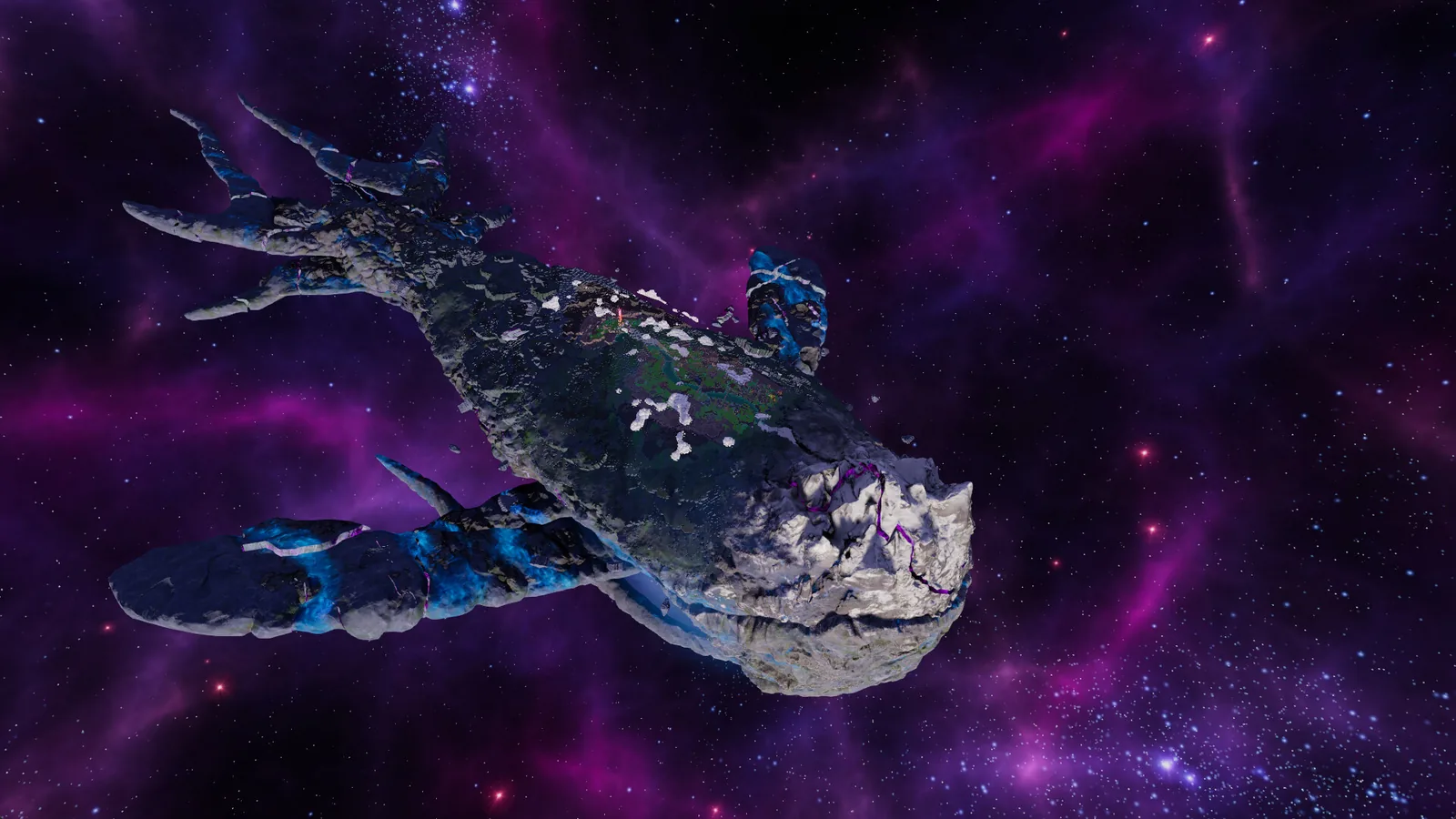
That penalty compounds, since unhappiness is load-bearing rather than cosmetic. Kewa reflects the settlement riding on it, and an industrial push that ignores biome health damages the whale, which in turn slows travel and blocks the memory conversations that deepen the bond. Keeping Kewa in good shape is covered in the Kewa guide.
Balance means sizing each line to what the next one can absorb. Run one Smelter at full input instead of two at half, spread industry so waste does not layer onto a single district, and site the Dump beside whichever line produces the most residue. A colony built wide but shallow keeps its Peeps moving and its factories running.
Track what a balanced colony looks like in the numbers you can actually see. Population, unemployment and sickness counts in the top bar all shift before production visibly drops, so they work as leading indicators; a district quietly accumulating sick Peeps is a district that will soon be producing less.
Spreading industry is therefore a production decision rather than a moral one. Fewer, larger clusters look efficient on paper, but the walking time and the pollution load land on the same Peeps, and their output is exactly what the cluster was built to raise.
Pro tip: Before you place a second copy of any production building, check what the first one is short of. One line starved of an input is worth more than two that are each half-fed, and the resources guide tells you which material each building draws on.
Sources
- Official Hooded Horse wiki, Terraforming (Wood Waste to Compost chain): https://wiki.hoodedhorse.com/Beyond_These_Stars/Terraforming
- Official Hooded Horse wiki, Pollution (Cleaners consume soot): https://wiki.hoodedhorse.com/Beyond_These_Stars/Pollution
- Official Hooded Horse wiki, Burner Generator (Wood and Wood Waste to Power and Soot): https://wiki.hoodedhorse.com/Beyond_These_Stars/Burner_Generator
- Steam store page (biome health, the relationship with Kewa): https://store.steampowered.com/app/2295060/
- Steam announcement, "Dev Blog #29 Keeping Kewa Happy" (biome health, Kewa fruit, travel): https://store.steampowered.com/news/app/2295060/view/1840944183775191
- Steam announcement, "Dev Blog #23 Strikes" (strikes halt part of production): https://store.steampowered.com/news/app/2295060/view/1830163047253538
- Steam announcement, "Dev Blog #28 Settleable Planets" (planetary goods, shells to cement): https://store.steampowered.com/news/app/2295060/view/1838407329267634
- Epic Games Store hands-on preview (two-output production lines, soot into steel, Kewa's reactions): https://store.epicgames.com/en-US/news/beyond-these-stars-is-a-sustainable-city-builder-where-you-survive-on-the-back-of-a-sentient-celestial-whale